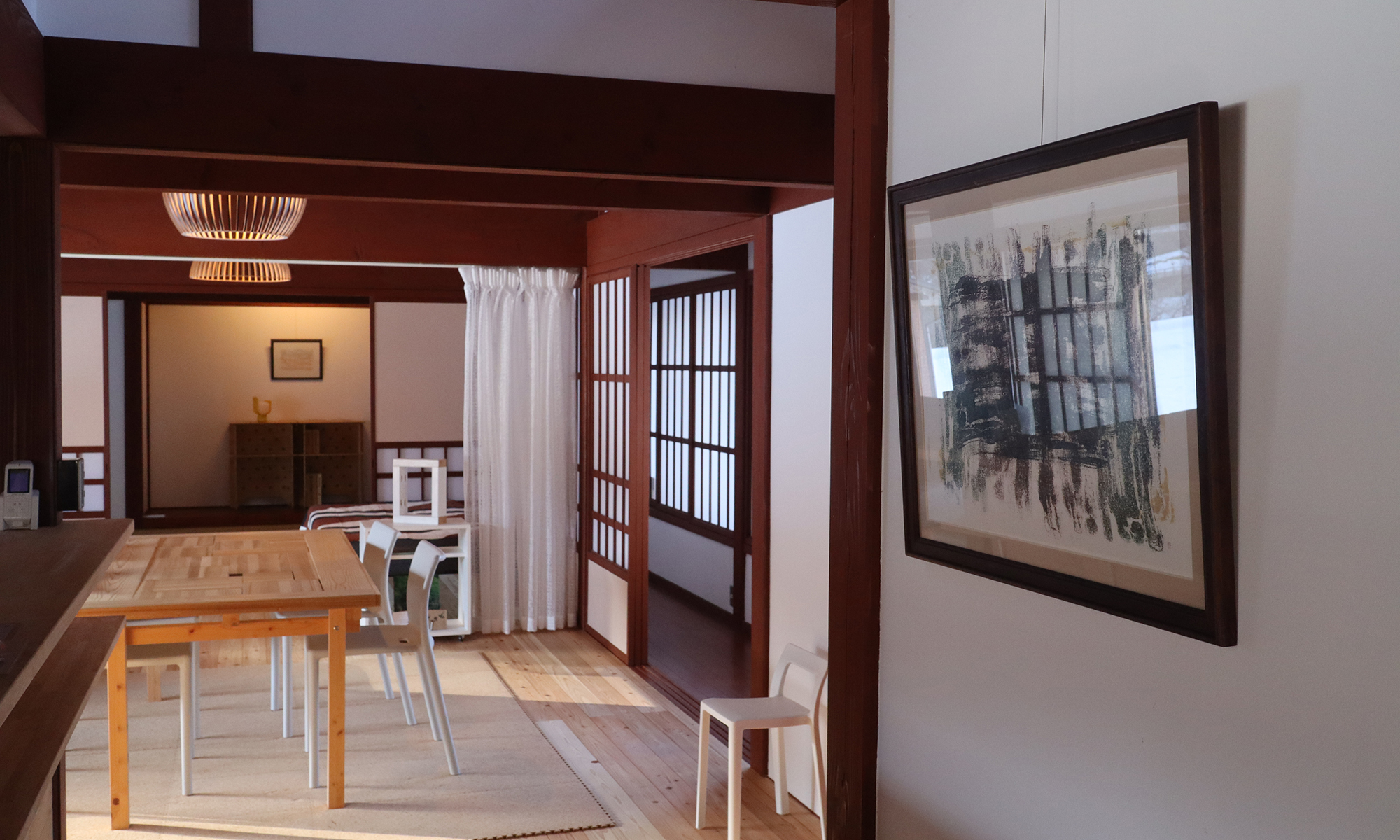
The Essai building was completed in October 1989 and used as the community center for this area.
From the moment it was born, it was a place where people gathered.
The rooms are on the second floor. Inside, both the south and north sides are covered with windows, with benches at just the right height for sitting running along the windows. The south side overlooks rice fields, while the north side faces a courtyard surrounded by cherry, plum, dogwood, and pine trees. Here stands a stone monument marking the birthplace of a monk Doshu (*), offering a serene view.
The story of how it was reborn as Essai…
The owners had long heard, occasionally, from a close acquaintance originally from Gokayama, “Gokayama is a great place, you should visit sometime.” In 2020, they suddenly acted on this and visited Gokayama for the first time. Perhaps it was just a feeling of liking it…? A sense of wanting to live there arose. For that, a place to live was needed. The search for a property began, and after some twists and turns, they found a house. They renovated it during the pandemic, moved in, and started their first village life.
Then, in early spring 2022, they acquired a building that had once used as the village community center.
Though over 30 years old and showing some damage, it’s a wonderful building sturdy, simple, and warm. Designed as a “snow-friendly house” based on the region’s architectural characteristics, its theme is allowing snow to fall off naturally for easier living. Images from its original construction are featured on the website of Sō Kenchiku Office, which handled the basic design.
While respecting the building’s inherent characteristics, they’ve been renovating and maintaining it, rearranging it for modern usability, lightness, and ease of use. They’ve been asking themselves, “How should this space be used…?”
“Using” it – more precisely, “bringing it to life and passing it on”
“A place to gather”
“A place to relax”
These keywords began to crystallize.
As they obtained permits to function as both lodging and a cafe, the infrastructure gradually took shape.
They decorated the windows visible from outside with flowers, and displayed forged vases and baking tins made by their sister, hoping they might become focal points…
Even small conversations opening the windows might make the building breathe life back into itself after its long slumber.
Before long, conversations naturally led to opportunities to enjoy the nighttime cherry blossoms in the monk Doshu’s garden with neighbors.
Yes, this truly is a community center. A place for connection.